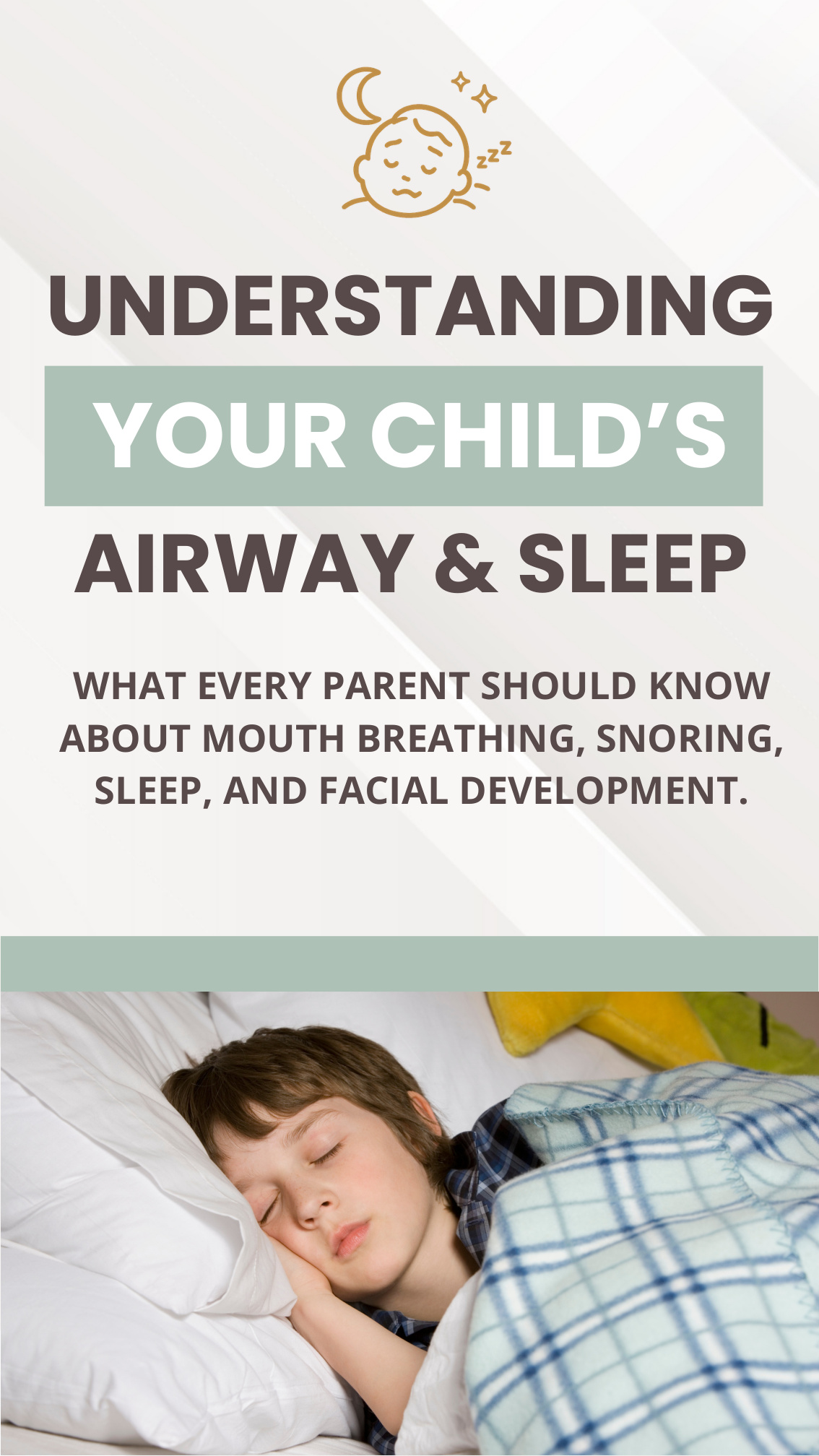
How breathing, snoring, and sleep habits can affect growth and oral health. This guide gives you practical, parent-friendly information to help you understand the topic and know what to discuss with your child’s dental team.
Key takeaways
- Mouth breathing and snoring can be signs worth discussing with a healthcare professional.
- Breathing patterns may affect sleep, growth, behavior, and oral health.
- A dental visit can help identify concerns and guide the next referral when needed.
Why Breathing Matters
Healthy breathing supports sleep, growth, focus, and oral development. When children regularly breathe through their mouth, snore, or struggle with sleep, it may be worth asking questions.
Signs Parents May Notice
Common signs include mouth breathing, open-mouth posture, snoring, restless sleep, grinding, frequent waking, daytime tiredness, difficulty focusing, or dry lips and mouth.
How It Connects to Teeth
Mouth breathing can affect saliva, gum comfort, cavity risk, jaw growth, and tooth positioning. It can also contribute to dry mouth, which makes teeth more vulnerable.
When to Bring It Up
Mention breathing or sleep concerns during your child’s dental visit. A pediatric dentist can look for oral signs and help determine whether an airway-focused evaluation or medical referral is appropriate.
Who May Need to Help
Depending on the concern, support may involve a pediatrician, ENT, orthodontist, myofunctional therapist, sleep specialist, or other healthcare professional.
What Parents Can Track
Keep notes about snoring, sleep quality, daytime behavior, mouth posture, allergies, congestion, and whether symptoms happen occasionally or most nights.
Common parent questions
Frequently asked questions
Is mouth breathing something to mention at the dentist?
Yes. Regular mouth breathing, snoring, dry mouth, or restless sleep can be worth discussing because breathing patterns may affect oral health and development.
Can mouth breathing affect teeth?
It can contribute to dry mouth, gum irritation, cavity risk, jaw growth concerns, and tooth-position changes in some children.
Who evaluates airway or sleep concerns?
Depending on the signs, your child may benefit from guidance from a pediatric dentist, pediatrician, ENT, orthodontist, sleep specialist, or myofunctional therapist.