
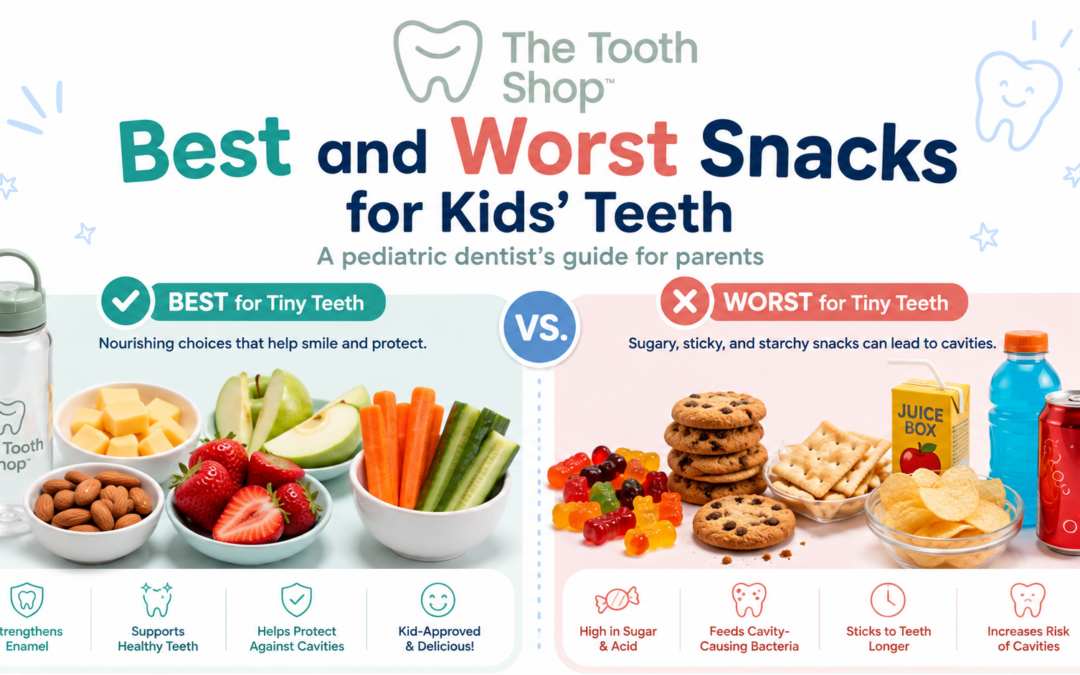
Best and Worst Snacks for Kids’ Teeth: A Pediatric Dentist’s Guide for Parents
Most parents know candy can be hard on teeth. But many are surprised to learn that some everyday kid snacks can also raise cavity risk, especially when kids snack frequently throughout the day.
The issue is not just sugar. It is also stickiness, how long food stays on the teeth, how often a child snacks, and whether they sip sugary drinks over time.
The American Academy of Pediatric Dentistry recognizes the importance of nutrient-dense diets and limiting sugar exposure to help reduce dental caries risk.
Here is a practical ranking of common snacks from most tooth-friendly to most cavity-risky.
Best Choice: Cheese and Plain Yogurt
Cheese and plain yogurt are great tooth-friendly options because they are low in added sugar and provide nutrients children need. Dairy foods can also be filling, which helps reduce constant grazing.
Try:
- Cheese sticks
- Cheese cubes
- Plain Greek yogurt
- Yogurt with fresh fruit
- Cottage cheese
Watch for flavored yogurts with high added sugar. Plain or low-sugar options are usually better choices.
Best Choice: Vegetables and Hummus
Crunchy vegetables are a strong choice because they are low in sugar and do not stick to teeth the way many processed snacks do.
Try:
- Cucumbers
- Carrots
- Bell peppers
- Snap peas
- Celery
- Hummus
For younger children, cut foods safely based on age and chewing ability.
Best Choice: Protein-Based Snacks
Protein-rich snacks can help kids stay full and reduce constant snacking. They are also usually less sticky than crackers, gummies, and dried fruit.
Try:
- Hard-boiled eggs
- Turkey roll-ups
- Chicken pieces
- Nut butters, if age-appropriate and allowed
- Nuts, for older children who can safely chew them
Good Choice: Whole Fruit
Whole fruit is a better option than juice or sticky fruit snacks. Fruit contains natural sugars, but it also has fiber and water.
Better options:
- Apples
- Pears
- Berries
- Melon
- Orange slices
After fruit, water can help rinse the mouth.
Use With Caution: Crackers and Pretzels
This one surprises parents. Crackers and pretzels are not candy, but they can break down into starches and stick in the grooves of teeth.
They are not “bad,” but they are easy for kids to snack on all day, which can increase cavity risk. Frequent between-meal snacks of sugars, cooked starches, and sweetened beverages are listed by the AAP as behaviors that can place children at higher risk for cavities.
Tips:
- Pair crackers with cheese or protein
- Serve them at one snack time instead of all-day grazing
- Offer water afterward
- Avoid sticky cracker sandwiches with sugary fillings
Use With Caution: Granola Bars
Granola bars can seem healthy, but many are sticky and sweet. They can cling to teeth, especially back molars.
Look for:
- Lower added sugar
- Less sticky texture
- More protein or fiber
- No candy pieces
- No chocolate coating
Higher Risk: Dried Fruit and Fruit Snacks
Raisins, dried mango, fruit leathers, and fruit snacks can stick to the grooves of teeth. Fruit snacks are especially tricky because many parents think of them as a fruit product, but they often behave more like sticky candy in the mouth.
Better swap:
Choose whole fruit more often than dried fruit or fruit snacks.
Higher Risk: Juice Boxes and Sports Drinks
Juice and sports drinks expose teeth to sugar and acid, especially when sipped slowly. Even 100% juice can contribute to cavity risk when it becomes a frequent habit. The AAPD notes that 100% juice and juice drinks have no essential role in a healthy diet for children and may contribute to excessive calorie intake and dental caries risk.
Better choice:
Water is the best everyday drink between meals.
Highest Risk: Sticky Candy, Gummies, and Frequent Sipping
Sticky candy and gummies can cling to teeth for a long time. Frequent sipping on sweet drinks can also keep teeth under repeated acid attacks.
The biggest concern is frequency. A treat with a meal is usually less concerning than grazing or sipping sugar throughout the day.
The Tooth Shop Tooth-Friendly Snack Ranking
| Ranking | Snack Type | Tooth-Friendly Score |
| Best | Cheese, plain yogurt, protein snacks | Excellent |
| Best | Veggies and hummus | Excellent |
| Good | Whole fruit | Good |
| Use with caution | Crackers, pretzels, granola bars | Moderate |
| Higher risk | Dried fruit, fruit snacks | Higher cavity risk |
| Highest risk | Sticky candy, juice boxes, sports drinks | Highest cavity risk |
How to Make Snacks Better for Teeth
You do not have to ban every treat. A realistic approach works better for most families.
Try these habits:
- Keep snacks to planned times
- Offer water between meals
- Avoid all-day grazing
- Pair starches with protein or dairy
- Choose whole fruit over fruit snacks
- Save sweets for occasional treats
- Brush twice daily with the right toothpaste
- Schedule regular pediatric dental visits
FAQs About Snacks and Kids’ Teeth
Are crackers bad for kids’ teeth?
Crackers are not automatically bad, but they can stick in grooves and break down into starches. Serve them at planned snack times and pair them with cheese, protein, or water.
Are fruit snacks worse than candy?
Fruit snacks can be very sticky and may cling to teeth like candy. Whole fruit is usually a better everyday choice.
Is juice bad for children’s teeth?
Frequent juice sipping can raise cavity risk because it exposes teeth to sugar and acid. Water is the best everyday drink between meals.
What are the best school snacks for teeth?
Good options include cheese sticks, plain yogurt, cut vegetables, hummus, whole fruit, eggs, and protein-based snacks.
How can I reduce cavity risk without banning treats?
Focus on frequency. Keep treats occasional, serve them with meals when possible, offer water afterward, and avoid grazing or sipping sweet drinks throughout the day.
Should my child brush after every snack?
Not necessarily. Brushing twice a day is the foundation. After snacks, drinking water can help rinse the mouth. Ask your pediatric dentist what is best for your child’s cavity risk.
Download our parent’s guide about sugar and cavities.
https://www.toothshop-az.com/parent-resources/guides/sugar-and-cavities/
Recent Comments