
Airway and Sleep in Kids: What Dentistry Can Reveal
A child’s mouth can tell us a lot.
At a dental visit, we are not only looking for cavities. We may also notice signs that point to breathing, airway, sleep, growth, or oral habit concerns.
This does not mean every child needs airway treatment. It does mean that certain signs are worth noticing early.
At The Tooth Shop, we help parents understand when dental findings may connect to sleep and breathing patterns.
Why Airway and Sleep Matter for Kids
Sleep affects a child’s growth, behavior, focus, mood, immune function, and development.
When a child has trouble breathing well during sleep, the body may not rest the way it should.
The American Academy of Pediatric Dentistry recognizes that obstructive sleep apnea can occur in children and may be associated with growth, learning, behavioral, and cardiovascular concerns.
What Is Sleep-Disordered Breathing?
Sleep-disordered breathing is a broad term that can include snoring, upper airway resistance, and obstructive sleep apnea.
Obstructive sleep apnea happens when breathing is partially or completely blocked during sleep. The American Academy of Pediatrics defines childhood obstructive sleep apnea as a breathing disorder during sleep involving prolonged partial airway obstruction or intermittent complete obstruction that disrupts normal ventilation and sleep patterns.
A pediatric dentist does not diagnose sleep apnea from a dental exam alone. But dental visits can help identify signs that may deserve further evaluation.
Signs Parents May Notice at Home
Parents may see:
- Snoring
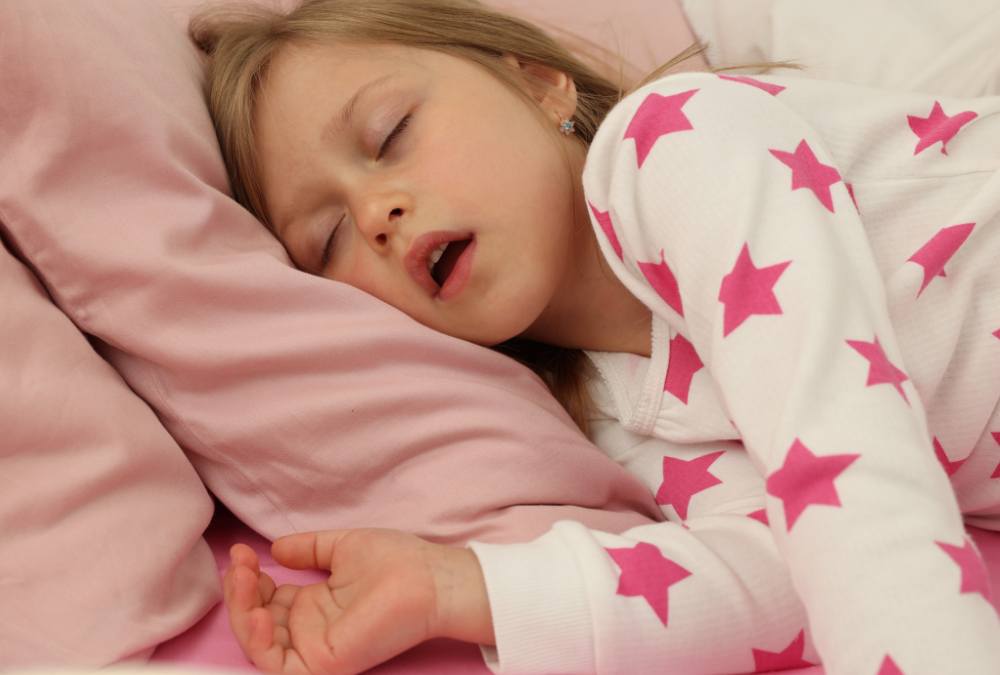
- Mouth breathing
- Restless sleep
- Sleeping with the head tilted back
- Pauses, gasping, or choking during sleep
- Sweating at night
- Bedwetting
- Morning headaches
- Waking up tired
- Daytime sleepiness
- Hyperactivity or difficulty focusing
- Dark circles under the eyes
- Frequent congestion
Some children with sleep-related breathing issues do not seem sleepy. Instead, they may seem wired, emotional, irritable, or inattentive.
Signs a Dentist May Notice
During a dental exam, a pediatric dentist may notice:
- Open-mouth posture
- Dry lips or dry mouth
- Narrow dental arches
- Crowding
- High palate
- Tooth wear from grinding
- Enlarged tonsils
- Tongue posture concerns
- Gum inflammation
- Heavy plaque or tartar buildup
- Cavities linked to dry mouth
- Jaw growth or bite concerns
The AAPD notes that assessment of tonsillar size and airway obstruction indicators may be part of the routine intraoral exam.
What Mouth Breathing Can Do to Oral Health
Mouth breathing can dry the mouth.
Saliva protects teeth by helping wash away food particles and neutralize bacteria. When the mouth is dry, plaque, tooth decay, and gum disease risk can increase.
In children, chronic mouth breathing may also be related to posture, oral habits, sleep quality, and dental development.
What About Teeth Grinding?
Teeth grinding, also called bruxism, can happen for many reasons. In some children, nighttime grinding may be related to sleep disruption or breathing effort. In others, it may be temporary and not connected to airway concerns.
A dentist can look for tooth wear, jaw soreness, headaches, or other patterns and help decide whether more evaluation is needed.
Why Early Screening Matters
Children grow quickly. The way the jaws, teeth, tongue, airway, and facial structures develop can influence breathing and sleep patterns.
Early screening does not mean jumping into treatment. It means identifying possible concerns before they become harder to manage.
Depending on the child, the next step may involve:
- Monitoring
- Improving nasal breathing habits
- Medical evaluation
- ENT referral
- Orthodontic evaluation
- Myofunctional therapy referral
- Allergy evaluation
- Sleep study referral
- Dental prevention support
Can a Dentist Treat Sleep Apnea?
A pediatric dentist does not replace a pediatrician, ENT, or sleep physician.
Dentists are part of the screening and referral team. They can identify oral and facial signs that may be related to breathing and sleep. They can also help manage dental issues connected to mouth breathing, grinding, dry mouth, or growth patterns.
If sleep apnea is suspected, medical evaluation is important.
Questions Parents Can Ask
If you are concerned about your child’s breathing or sleep, ask:
- Do you see signs of mouth breathing?
- Are my child’s tonsils enlarged?
- Is their palate narrow?
- Is crowding affecting tongue space?
- Do you see tooth wear from grinding?
- Could dry mouth be increasing cavity risk?
- Should we talk to our pediatrician or an ENT?
- Should we consider an airway or orthodontic evaluation?
How The Tooth Shop Approaches Airway and Sleep
At The Tooth Shop, we take a whole-child approach.
We look at your child’s teeth, gums, bite, jaw growth, oral habits, breathing patterns, and parent concerns. When something looks outside the normal range, we explain what we see and guide you toward the right next step.
Our goal is not to overdiagnose. It is to help parents catch meaningful signs early and feel supported.
Final Thoughts
Airway and sleep concerns can show up in the mouth.
Snoring, mouth breathing, grinding, dry mouth, crowding, and enlarged tonsils are all signs worth discussing with your child’s dentist.
If you have noticed changes in your child’s sleep, breathing, behavior, or oral health, The Tooth Shop can help you understand what may be connected and what to do next.
Have questions about your child’s breathing, sleep, or dental development?
Download the parent’s guide.
https://www.toothshop-az.com/parent-resources/guides/airway-mouth-breathing-sleep-kids/
Recent Comments