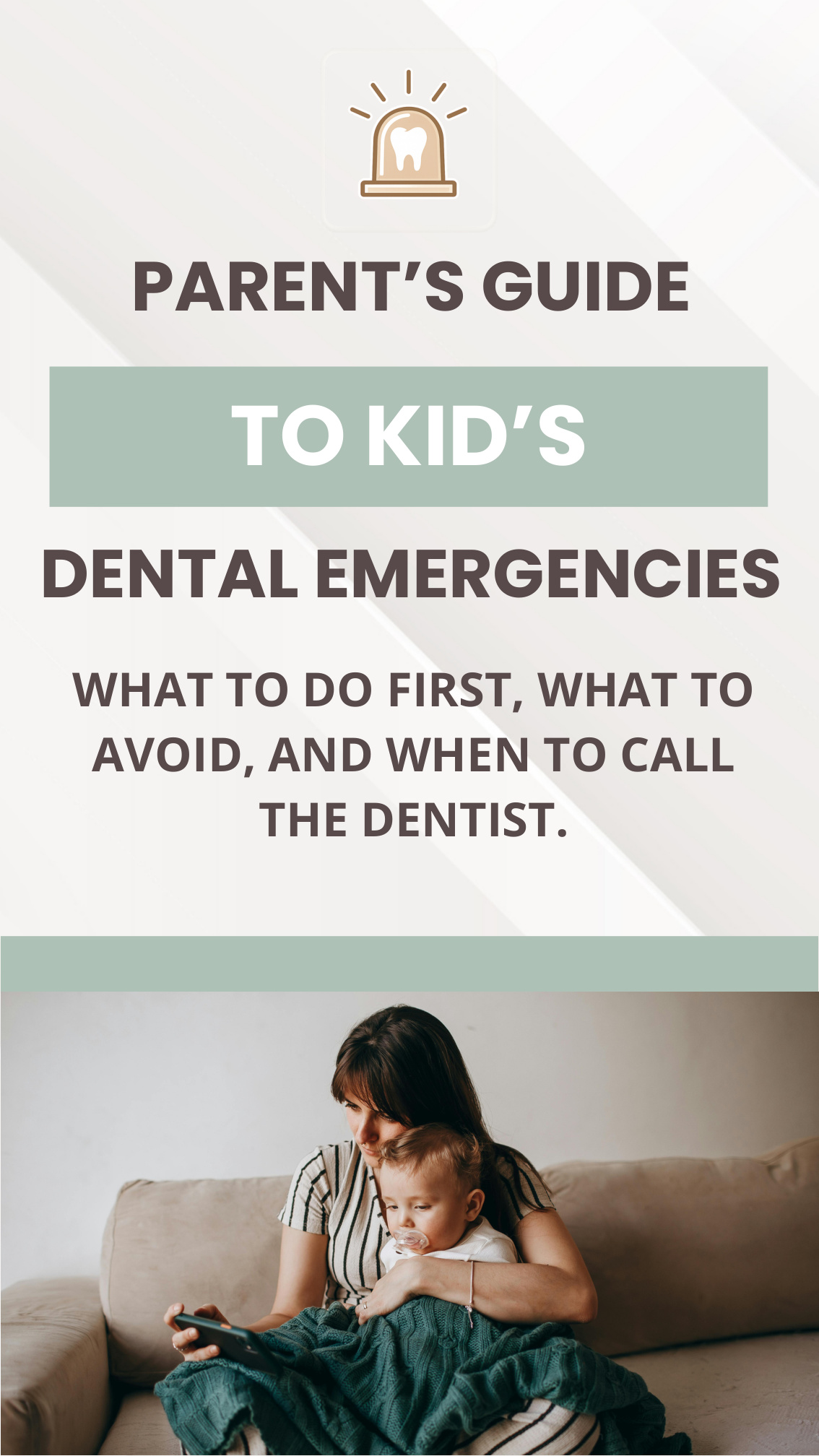
What to do first, what to avoid, and when to call the dentist. This guide gives you practical, parent-friendly information to help you understand the topic and know what to discuss with your child’s dental team.
Key takeaways
- Stay calm, check for breathing or serious injury, and call for help when needed.
- Dental trauma is time-sensitive, especially if a permanent tooth is knocked out.
- A pediatric dentist can help you decide whether the situation needs urgent care.
Start With Safety
If your child has trouble breathing, heavy bleeding, signs of a head injury, or a medical emergency, call emergency services first. Once your child is safe, contact your dental team for guidance about the tooth or mouth injury.
Tooth Pain
Tooth pain can come from cavities, loose teeth, food stuck between teeth, gum irritation, or infection. Rinse with warm water and gently floss around the area. Avoid placing aspirin on the gums or tooth, because it can burn soft tissue.
Knocked-Out Baby Tooth
Do not put a baby tooth back into the socket. Save the tooth if you can, control bleeding with gentle pressure, and call your child’s dentist. The dental team will check the area and make sure the permanent tooth underneath is protected.
Knocked-Out Permanent Tooth
A knocked-out permanent tooth needs urgent attention. Hold the tooth by the crown, not the root. If it is dirty, gently rinse it with milk or saline. Place it in milk or a tooth-preservation solution and call the dentist immediately.
Chipped Or Broken Tooth
Find any broken pieces if possible and save them. Rinse your child’s mouth with water and use a cold compress for swelling. A dentist can determine whether the tooth needs smoothing, bonding, a filling, or additional treatment.
Swelling Or Infection
Facial swelling, fever, severe pain, or a pimple-like bump on the gums can signal infection. These symptoms should be evaluated promptly. Dental infections can worsen quickly and should not be ignored.
What Not To Do
Do not ignore ongoing pain, do not use sharp objects to remove stuck items, and do not delay care after trauma. Quick communication with your dental team helps protect your child’s comfort and long-term oral health.
Common parent questions
Frequently asked questions
What should I do first in a dental emergency?
Start with your child’s overall safety. If there is trouble breathing, heavy bleeding, or a head injury, seek emergency medical care first. Then call your child’s dental team.
Should I put a knocked-out baby tooth back in?
No. A baby tooth should not be placed back into the socket. Save the tooth if possible, control bleeding with gentle pressure, and call the dentist.
What should I do if a permanent tooth is knocked out?
Hold the tooth by the crown, avoid touching the root, place it in milk or a tooth-preservation solution, and call the dentist immediately.