
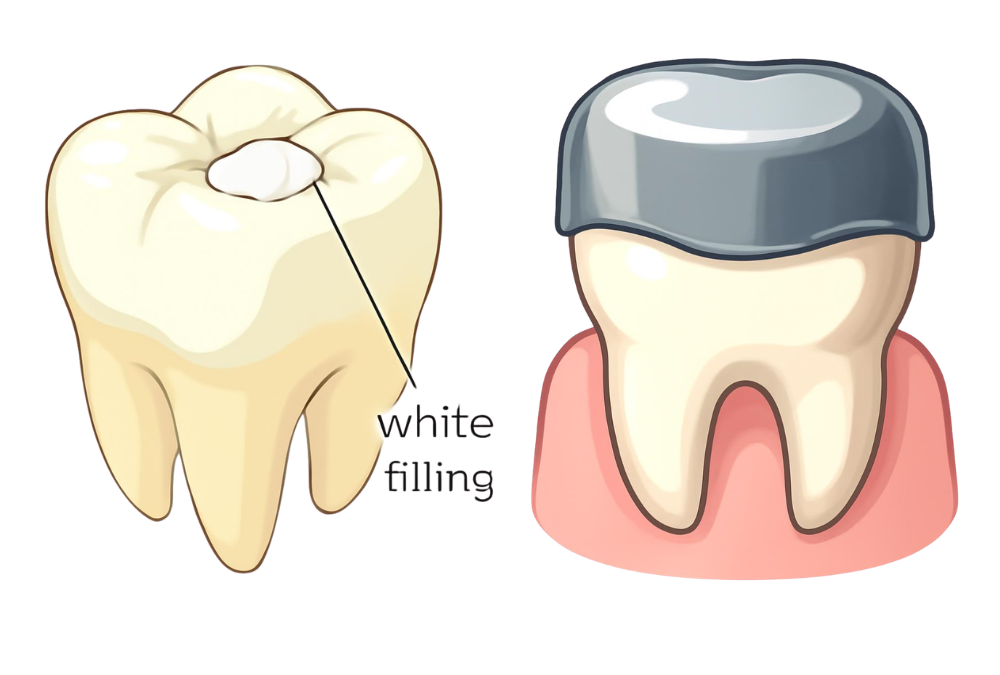
White Fillings and Silver Caps for Kids: What Parents Should Know
When your child has a cavity, one of the first questions parents often ask is, “Can we just do a white filling?” Sometimes the answer is yes. Other times, a silver cap may be the stronger, longer-lasting option.
At The Tooth Shop, our goal is to help parents understand the “why” behind treatment recommendations so they can feel confident, informed, and never pressured.
First, Why Treat Baby Teeth?
Baby teeth may eventually fall out, but they play an important role while they are in your child’s mouth. They help kids chew, speak, smile, and hold space for adult teeth.
When a baby tooth has a cavity, ignoring it can lead to pain, infection, swelling, difficulty eating, and more complicated treatment later. Tooth decay can cause serious issues even in children who do not yet have their permanent teeth.
Treating a baby tooth is not just about saving the tooth. It is about keeping your child comfortable, healthy, and able to grow and develop normally.
What Is a White Filling?
A white filling is a tooth-colored material used to repair a cavity or damaged part of a tooth. The dentist removes the decayed area, cleans the tooth, and fills the space with a material that blends in with the natural tooth.
White fillings are often used when:
- The cavity is small to moderate
- The tooth has enough strong structure left
- The cavity is in an area that can hold a filling well
- The tooth can stay dry during the procedure
- The child can cooperate long enough for the filling to be placed properly
White fillings are a great option in many cases, especially when a cavity is caught early.
What Is a Silver Cap?
A silver cap is a stainless steel crown. It covers the visible part of a baby molar and protects the tooth from further breakdown.
Silver caps are commonly used in pediatric dentistry because they are strong, durable, and designed to fit baby teeth. The American Academy of Pediatric Dentistry includes stainless steel crowns among common restorative options for children’s teeth.
A silver cap may be recommended when:
- The cavity is large
- Several surfaces of the tooth are affected
- The tooth is weak or likely to break
- A filling may not last well
- The child has a high cavity risk
- The tooth has had baby-tooth nerve treatment
- The tooth needs to last several more years before falling out naturally
Why Not Always Use a White Filling?
Parents understandably like the idea of a tooth-colored option. But in pediatric dentistry, the best-looking option is not always the strongest option.
If a cavity is too large, a white filling may not have enough healthy tooth to hold onto. It may break, leak, fall out, or allow the cavity to continue around the edges.
A silver cap can be a better choice when the goal is to protect the tooth until it is ready to fall out on its own.
Are Silver Caps Necessary?
Sometimes, yes.
A silver cap is not recommended because a dentist wants to be more aggressive. It is often recommended because the tooth needs more protection than a filling can provide.
Restorative treatment decisions depend on the child’s age, cavity size, tooth structure, cavity risk, cooperation, and how long the tooth needs to remain in the mouth. The AAPD notes that restorative dentistry for children should consider the stage and risk of the disease, not just the cavity itself.
How Are Fillings and Caps Adapted for Kids?
Children’s teeth are smaller and shaped differently than adult teeth. Pediatric dental treatment is adapted for those differences.
For white fillings, the dentist carefully shapes the filling to match the child’s bite and tooth form.
For silver caps, the dentist selects a crown size made for baby teeth, adjusts the tooth, and fits the crown so it protects the tooth while allowing normal chewing and spacing.
The goal is always the same: restore function, prevent pain, and make treatment as comfortable as possible.
What If My Child Needs Nerve Treatment?
If decay reaches deep into a baby tooth, the tooth may need a pulpotomy, sometimes described as baby-tooth nerve treatment. After this procedure, a silver cap is often recommended because the tooth needs full coverage and protection.
In these cases, the cap helps seal and strengthen the tooth so it can continue doing its job.
Will My Child Notice the Silver Cap?
At first, your child may notice that the tooth feels different. Most kids adjust quickly.
Parents may notice the silver color more than the child does. In many cases, especially on back molars, silver caps are not very visible during normal talking or smiling.
Can Cavities Come Back After a Filling or Cap?
Treatment fixes the damaged tooth, but it does not remove the underlying cavity risk. If brushing, flossing, diet, fluoride exposure, or snacking habits do not improve, new cavities can still form on other teeth.
That is why The Tooth Shop focuses on prevention as much as treatment.
How Parents Can Help After Treatment
After a filling or cap, parents can help by:
- Brushing twice daily
- Helping younger children brush
- Flossing teeth that touch
- Choosing water between meals
- Limiting frequent snacks and sugary drinks
- Keeping regular dental visits
- Following any specific instructions from the dentist
Final Thoughts
White fillings and silver caps both have an important place in pediatric dentistry. The right choice depends on the tooth, the cavity, your child’s age, and how much support the tooth needs.
At The Tooth Shop, Dr. Perkins helps parents understand treatment options clearly so they can make confident decisions for their child’s care.
Questions about fillings, silver caps, or your child’s treatment plan?
Download the parent’s guide.
https://www.toothshop-az.com/parent-resources/guides/white-fillings-silver-caps-kids/
Book an appointment.
Recent Comments